Mind
Understand what shapes you.
PSYCHOLOGY • PATTERNS • CONDITIONING • CONSCIOUSNESS
We do not arrive in adulthood as blank pages. We are shaped by what we experience, what we are taught, the relationships we inhabit and the meanings we make from them.
The Mind layer of The Incharge Way explores this inner landscape, not to control every thought, but to understand what has shaped the person doing the thinking.
THE MIND IS A MEANING-MAKER
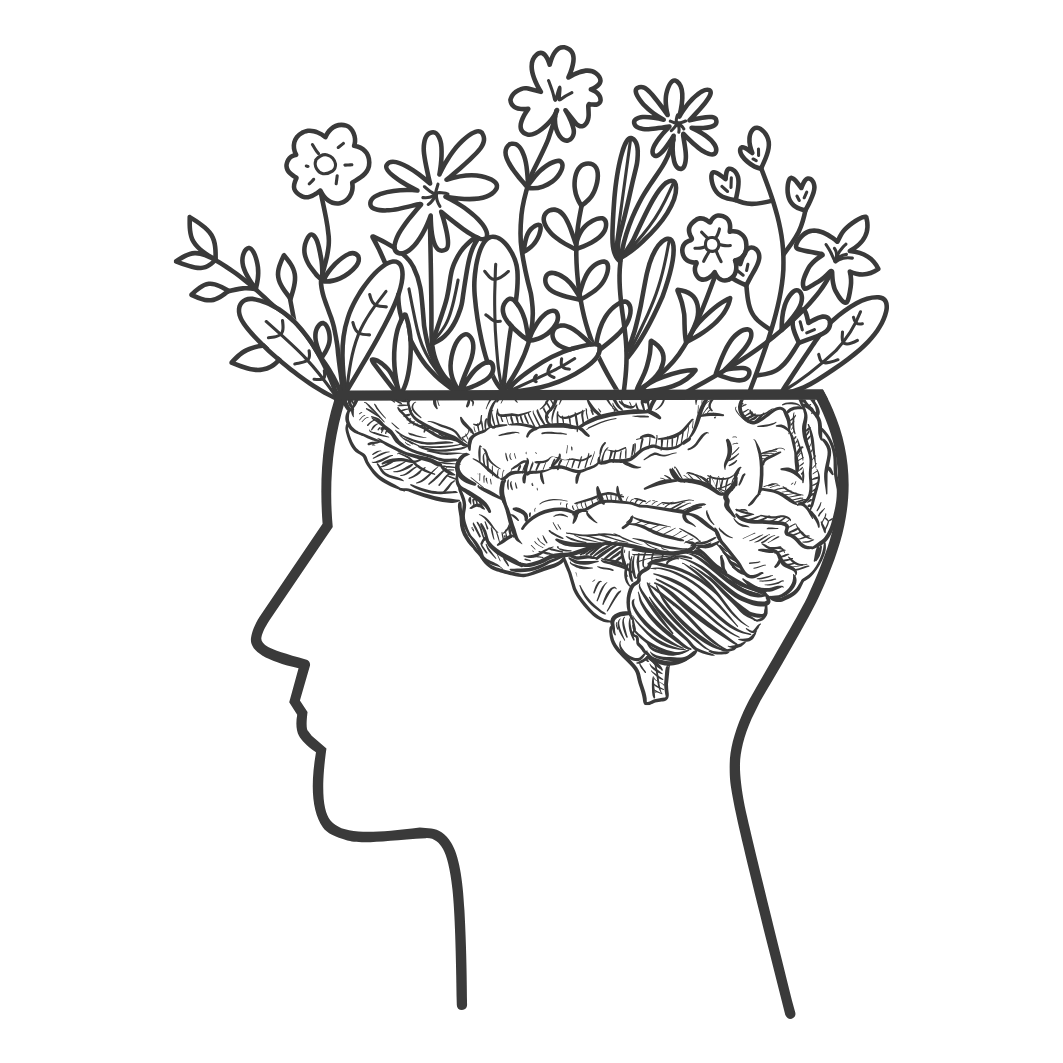
We experience life through the meanings we make of it. The mind is the world of thought, perception, belief, memory, interpretation and meaning. It is where we form stories about who we are, what the world expects from us, what is safe, what is possible and where we belong.
Some of those stories are consciously chosen. Many are not. They emerge through family, culture, education, relationships, experience and adaptation. Over time, they can become so familiar that we stop recognising them as interpretations at all.
They simply become:
This is who I am.
The work of the Mind begins by becoming curious about that certainty:
What am I telling myself?
Where did this belief come from?
Is it still true?
What patterns keep repeating?
What possibilities have I stopped seeing?
THE SELF WE LEARN TO BECOME
Not everything we call “me” necessarily began with us.
We learn very early how to exist within the worlds we inhabit. We discover what receives approval and what creates conflict. We learn which parts of ourselves are welcomed, which are inconvenient and which may need to be hidden, softened, strengthened or performed. These adaptations are not necessarily wrong. Often, they have helped us belong, succeed, cope or remain safe. But eventually a question can emerge:
Is the person I learned to be
still the person I want to become?
Psychology gives us ways of exploring that question. Through psychological understanding, reflective inquiry and work with conscious and unconscious patterns, we can begin to distinguish between adaptation and choice, conditioning and preference, expectation and authenticity.
AUTHENTICITY — BETWEEN CONDITIONING AND CHOICE
This question sits at the heart of my research into authenticity. My academic research explores how people negotiate who they are within the realities of their lives: the roles they occupy, the expectations surrounding them and the competing influences that shape their choices.
Authenticity, from this perspective, is not simply a matter of “being yourself.” It requires awareness, discernment and enactment. We first have to recognise the forces shaping us. Only then we can begin asking:
What do I retain?
What do I question?
What do I choose?
And how do I live that choice?
↓
↓
↓
CONSCIOUS & UNCONSCIOUS
Not everything that shapes us is conscious.
We can understand something intellectually and still find ourselves repeating it.
We can know that a fear is irrational and still feel afraid.
We can recognise a pattern and still find ourselves inside it.
This is because insight is only one dimension of change. Some patterns operate beneath conscious awareness through learned associations, emotional responses, habits and deeply embedded ways of interpreting experience. This is why my work can include approaches such as reflective inquiry, coaching and hypnotherapy alongside psychological understanding. Different doors allow us to explore different layers of the same person.

THE SYMBOL OF MIND
Two circles meet. Neither disappears. And between them, a third space emerges. For me, this is a powerful symbol for the work of the Mind.
We often experience our interpretation of reality as reality itself. But when we become able to hold what we believe alongside another possibility, we transcend duality and something opens between them:
Perspective.
That space allows us to question without rejecting ourselves, to consider another interpretation and to choose rather than simply repeat. The work is not to destroy one circle.
It is to become conscious of the space between them.
THE VESICA PISCIS
WHY MIND ISN'T ENOUGH
Understanding changes something.
But understanding is not the whole of transformation.

We can understand our childhood. Understand our patterns. Understand why a relationship affects us. Understand why we behave as we do. Understand exactly what we “should” change. And still find ourselves unable to live differently.
Because we are not minds walking around in bodies. We are embodied human beings. Our experiences are felt through sensation, emotion, relationship, action and the nervous system. What we understand cognitively must eventually encounter the reality of how we actually experience life. And there is another question psychology alone may not be trying to answer:
Who am I beneath everything I have learned to be?
ONE PERSON. THREE LENSES.
Mind
Psychology helps us explore what has shaped us.
Body
Embodiment brings us into the reality of lived experience.
Soul
Symbolic and contemplative frameworks invite us to explore who we might be beneath conditioning.
No single lens tells the whole story.
The Incharge Way lives between all three.
Psychology offers evidence-informed frameworks for understanding aspects of human thought, behaviour and experience. Astrology belongs to a different tradition. I use it as a symbolic and archetypal framework for reflection, not as psychological diagnosis or scientific measurement.
Between these perspectives there is the embodied human being actually living the life.
Knowing is not the same as living.
The Mind helps us recognise. It gives language to experience, illuminates patterns and creates the possibility of conscious choice. But eventually the question changes from: What do I understand? to: What am I actually experiencing? Because insight must eventually leave the realm of thought and enter lived experience.
This is where we meet the Body.